
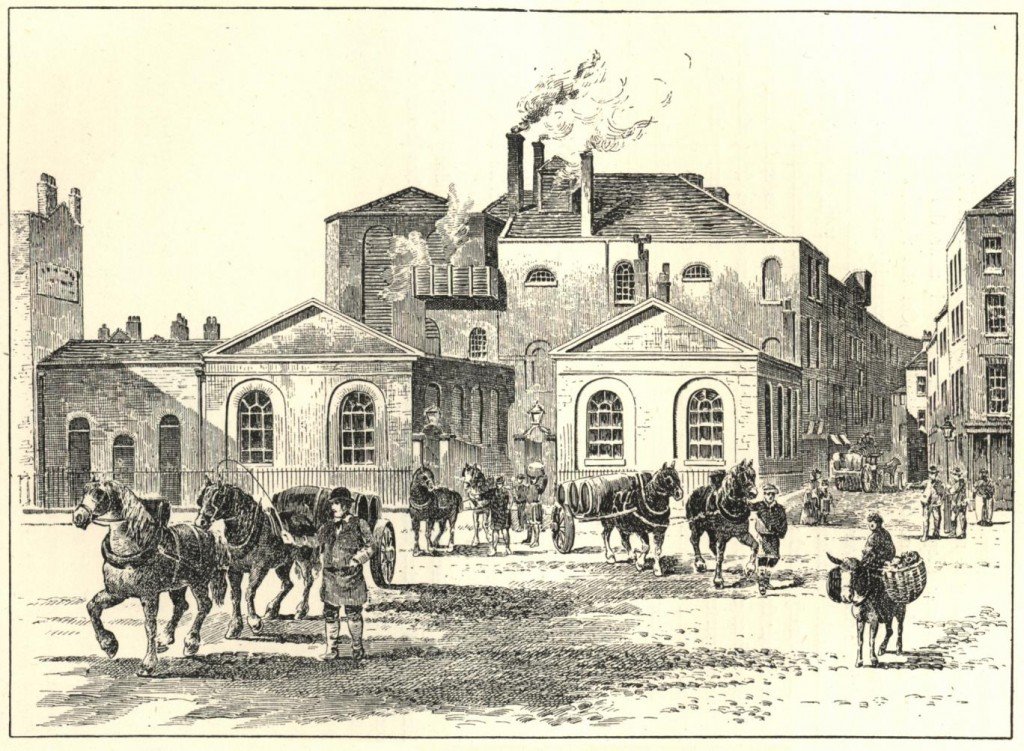
On the 17th of October 1814, the residents of St. Giles Rookery—a notoriously crowded London slum— went about what seemed to be an ordinary autumn day. Fourteen-year-old Eleanor Cooper was washing pots at an outdoor water pump. Mary Banfield was enjoying tea with her four-year-old daughter, Hannah. Close by, sadly, Anne Saville was holding a wake for her two-year-old son who had died just the day before.
Looming over all this ordinariness within the rookery was the enormous Horse Shoe brewery, operated by Meux & Company. The brewery produced thousands of barrels of the hugely popular porter ale, a dark beer which was matured for several months inside massive vats standing at an impressive twenty-two feet high and strengthened by heavy iron hoops.
On this particular day, brewery worker George Crick noticed that one of the hoops had dislodged, but, given that this happened periodically, no-one was unduly concerned. This time, however, was different. The vat exploded and the force of the rupture knocked the valve from a neighboring vat, ultimately triggering a catastrophic chain reaction. Thousands of gallons of black fermenting beer crashed out into the neighboring streets in a fifteen-foot tidal wave, immediately destroying two houses. Hannah and her mother Mary, as well as Anne and her four wake attendees, were all killed. As the beer continued to pour through the streets, basements were flooded and terrified residents scrambled onto furniture to escape the rising liquid. The sheer force of the beer swept away everything in its path, leaving a trail of destruction before smashing into and obliterating a twenty-five-foot high, two-foot thick wall, showering bricks through the air and over neighboring houses, killing the poor, unsuspecting Eleanor.
All told, eight people—four women and four children—died. Two days later, an investigation led to a verdict that all eight had lost their lives “casually, accidentally and by misfortune.” Meux & Company was therefore not held legally responsible and was not required to pay compensation. The disaster did cost the brewery a vast financial loss of £23,000 but it was able to recoup a little more than £7,000 by reclaiming the excise duty it had already paid on the beer, saving the company from bankruptcy.