
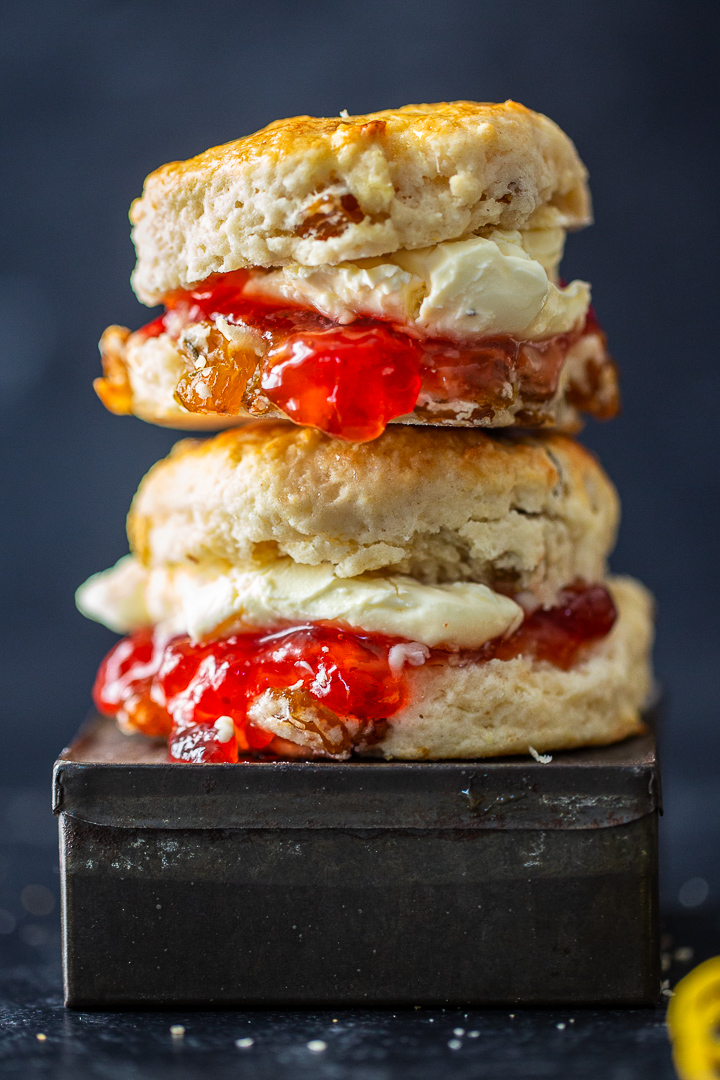
Scones. Quintessentially, iconically British.
And yet their story begins much further north, in Scotland, where they looked—and tasted—quite different from the delicious treats we associate with afternoon tea. Early scones were likely made with oats and cooked on a griddle over an open fire. With the introduction of baking powder in the 19th century, yeast was no longer required and suddenly scones could rise into the lighter, more delicate pastry we know and love today.
And rise they did—literally and figuratively—to iconic status during the Victorian Era, thanks, in part, to the Duchess of Bedford who popularized the idea of afternoon tea in the 1840s, desperate to stave off her hunger pangs during that inconveniently long stretch between lunch and dinner.
Bring me something light, she said. But tasty. Perhaps a little sweet. Something that will go beautifully with a cup of tea. And somewhere along the way, the scone—split open and generously adorned with jam and clotted cream—became a mainstay. Because it suits the occasion perfectly.
As a child, I enjoyed a scone in a tiny Welsh tearoom tucked among the rolling hills of a lush and beautiful tiny village. Upstairs, the room was all low, dark beams and slanted, creaky floors, alive with chatter and the tinkling of teaspoons. I can remember that scone to this day. Warm, dripping with butter, and enjoyed in the coziest of places that might have been there since time began. It is also a reminder that scones don’t always have to be fancy and enjoyed in elegant settings with pretty cakes. Their humble background lends them to more unassuming surroundings as well—a crackling afternoon fire with a good book, a morning kitchen table with a cup of builder’s brew. Served gently warm, with a generous swipe of good salted butter, they are the epitome of ease and grace.
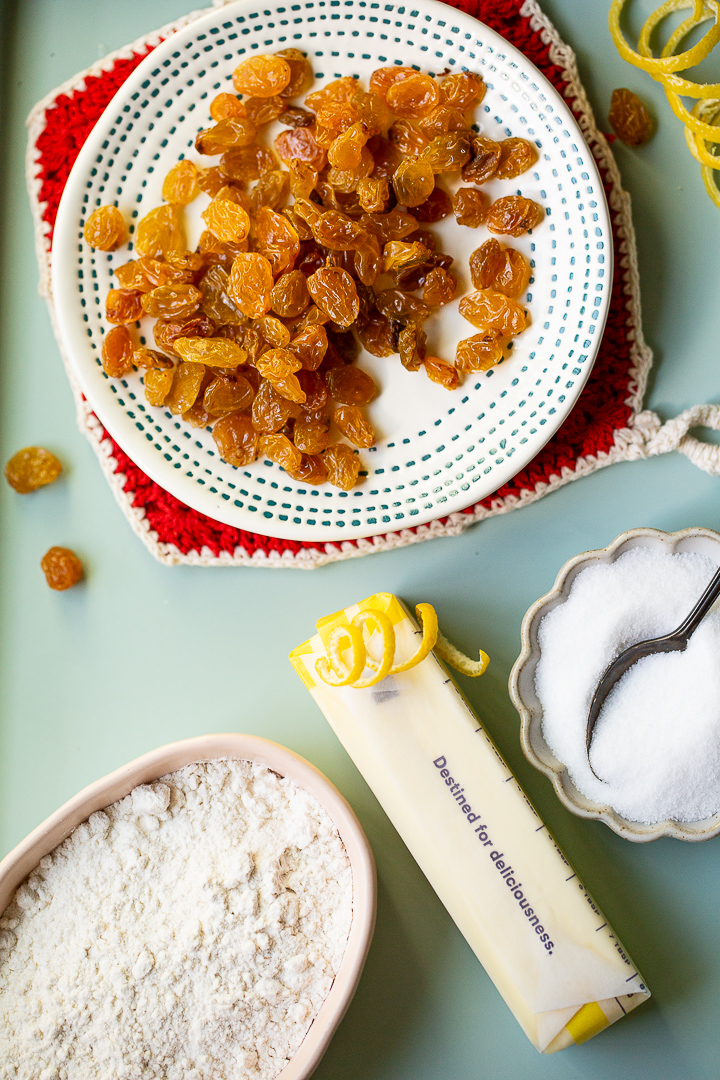
Scones can be made with a variety of ingredients, but mine are made with buttermilk and no eggs. They are wonderful plain, of course, but I much prefer them studded with plump, golden raisins, as many as can be stuffed in. Currants come in a very close second, but I seem to have settled mostly on raisins, these days. I also add some lemon zest. Firstly, there isn’t much that isn’t improved by the sharpness of lemon, and here I adore the way its citrusy brightness cuts a little through the richness and plays nicely with the fruit, but it is certainly not essential.

What is essential is their shape. They must be round. And I personally pronounce them rhyming with tone, not gone. But then I’m from the north and not the posh south.

As far as cream goes, there is no beating the dense, gentle yellow richness of clotted cream. Whipped cream doesn’t quite have the heft, although it will certainly do in a pinch. Try whisking in some mascarpone to get a little closer to clotted cream’s consistency with a much higher fat content and yummier mouth feel.
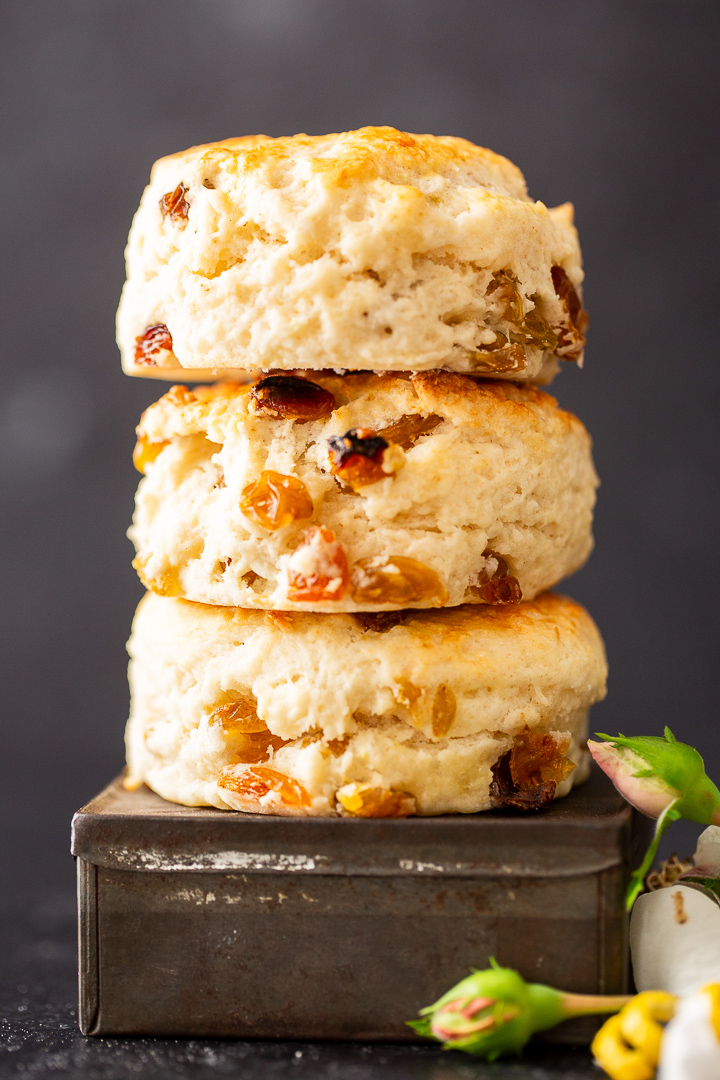
Or just skip it altogether and use a really good butter. Butter alone is a perfectly respectable way to eat a scone, although the addition of a really good jam is never a bad thing either. Strawberry is most traditional and my favorite.
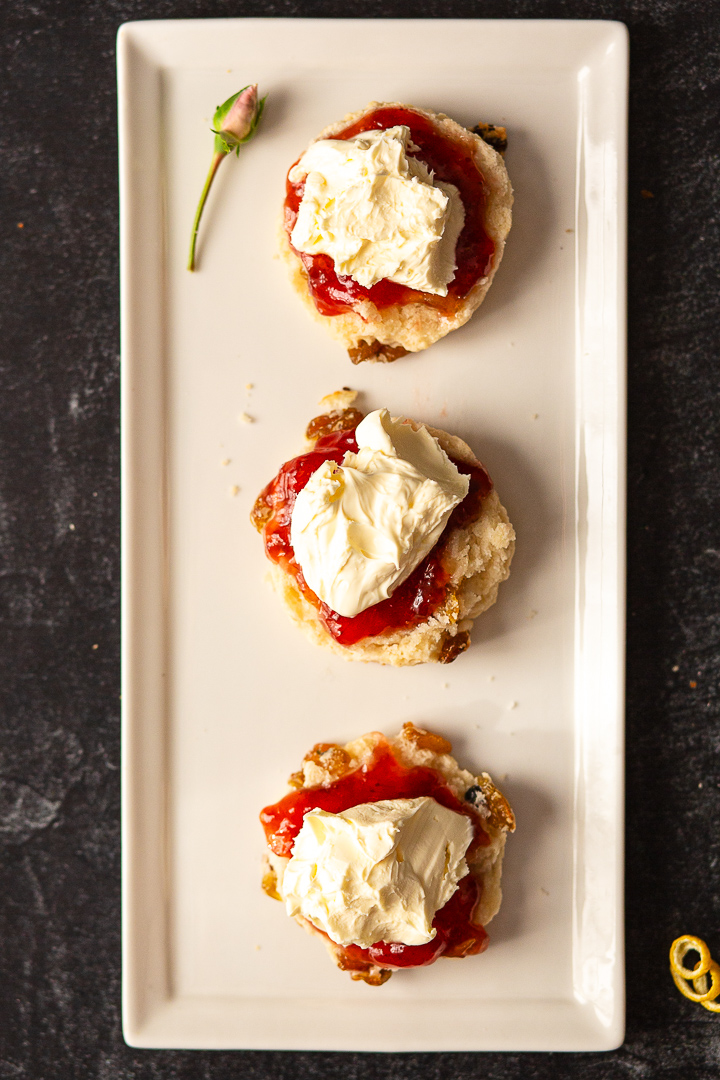
But for all its ceremony, history, and regional rivalries, a scone can be as simple or as elaborate as you choose to make it. It may have started in humble beginnings, cooked over an open fire and sporting a Scottish accent, risen through the ranks to arrive in the elegant sitting room of a glamorous Duchess, but every incarnation between is just as delightful.
Scones
- flour, 1-3/4 C. + 2T (250g) all-purpose flour
- baking powder, 2-1/2 tsp.
- salt, 1/4 tsp.
- lemon peel, 1/2 lemon, grated
- butter, 8T. (113g) unsalted, cold, and cut into 1/2″ pieces
- 1 C. (60g) dried sultanas or currants, reduce a little if you want them less fruit heavy
- buttermilk, cold 1/2 C.+ 2 tsp (125g)
- milk, cream or well whisked egg, just a touch to brush on top of the scones before baking
- Preheat oven to 425˚. Line a baking sheet with parchment paper.
- In a large bowl, thoroughly stir flour, baking powder, salt, and lemon peel.
- Add butter and rub together until mixture is thoroughly combined, with a sandy texture and just small lumps of butter visible.
- Add the buttermilk and stir until no bits of dry flour remain
- With floured hands, knead gently until surface is smooth and free of cracks.
- Transfer dough to a well-floured counter and gather into a ball.
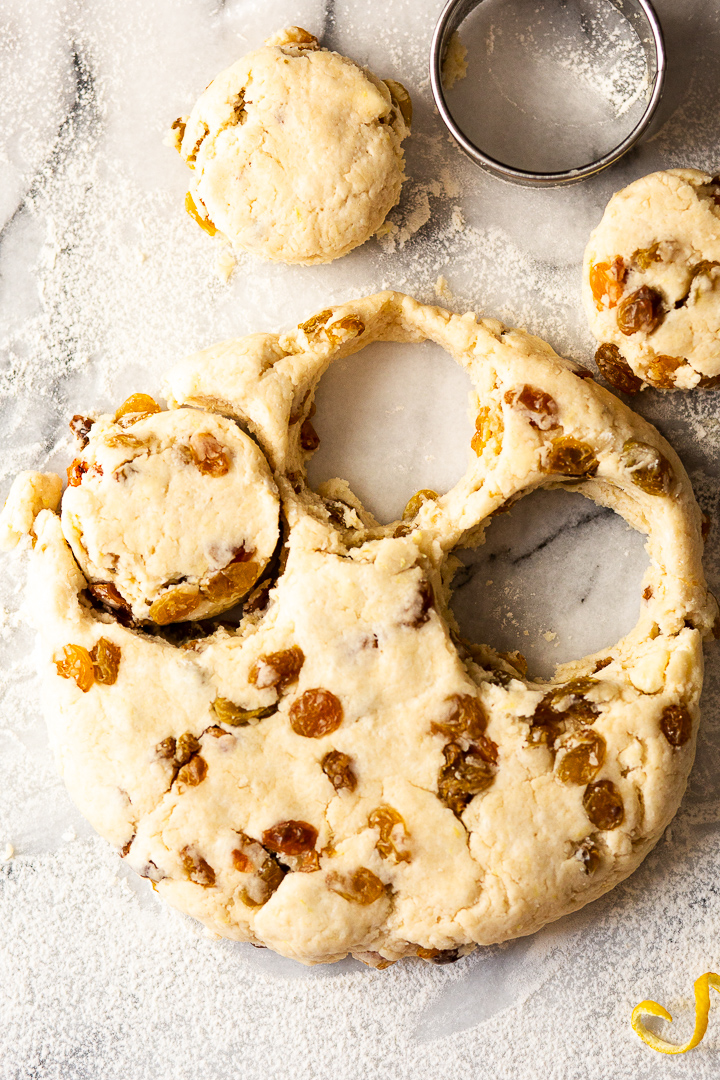
- Press gently to form a roughly 6″ disk, about 1″ thick.
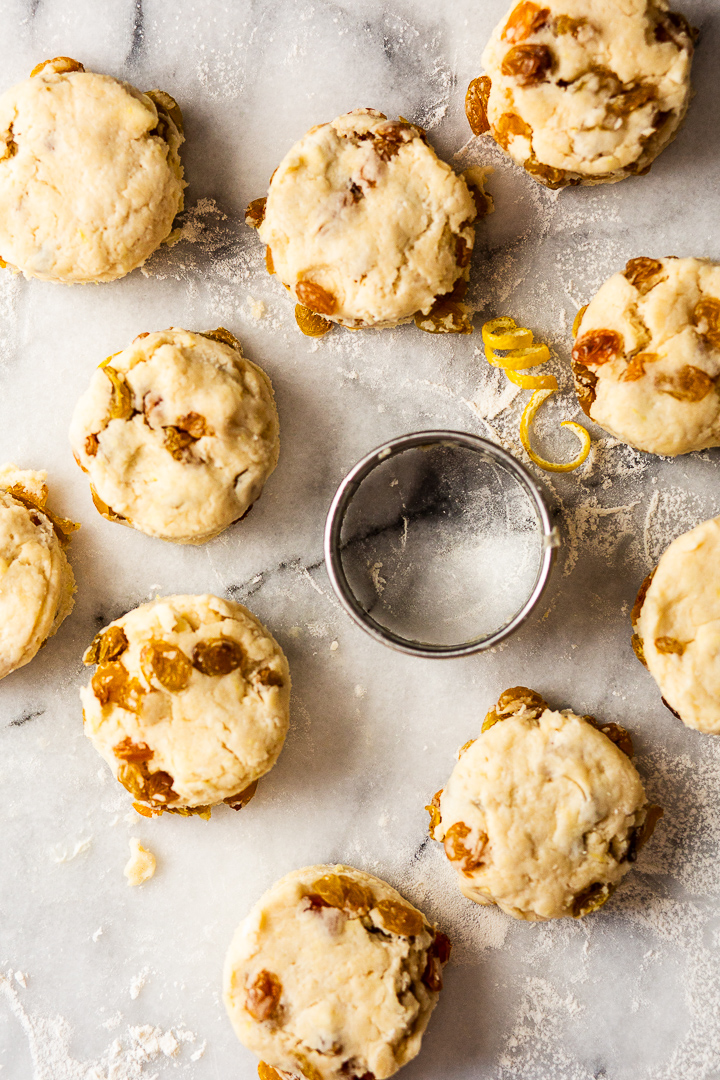
- Using a 2″ round cutter, stamp out six rounds, but push straight down, do not twist. This will interfere with the scones being able to rise properly.
- Gather the dough scraps and create another 1″ high disk. You should get another four scones, for ten in all.
- Place scones on the prepared sheet and brush tops with a little milk, cream, or well whisked egg.
- Put in the oven and bake until golden brown, 12-13 minutes. Transfer scones to a wire rack and let cool for at least 10 minutes. Serve scones warm or at room temperature with your choice of topping.
The scones freeze beautifully. Just make sure they are fully cold before doing so. They will thaw out within half an hour, or you can put them in the microwave for a few seconds. Instant delish!