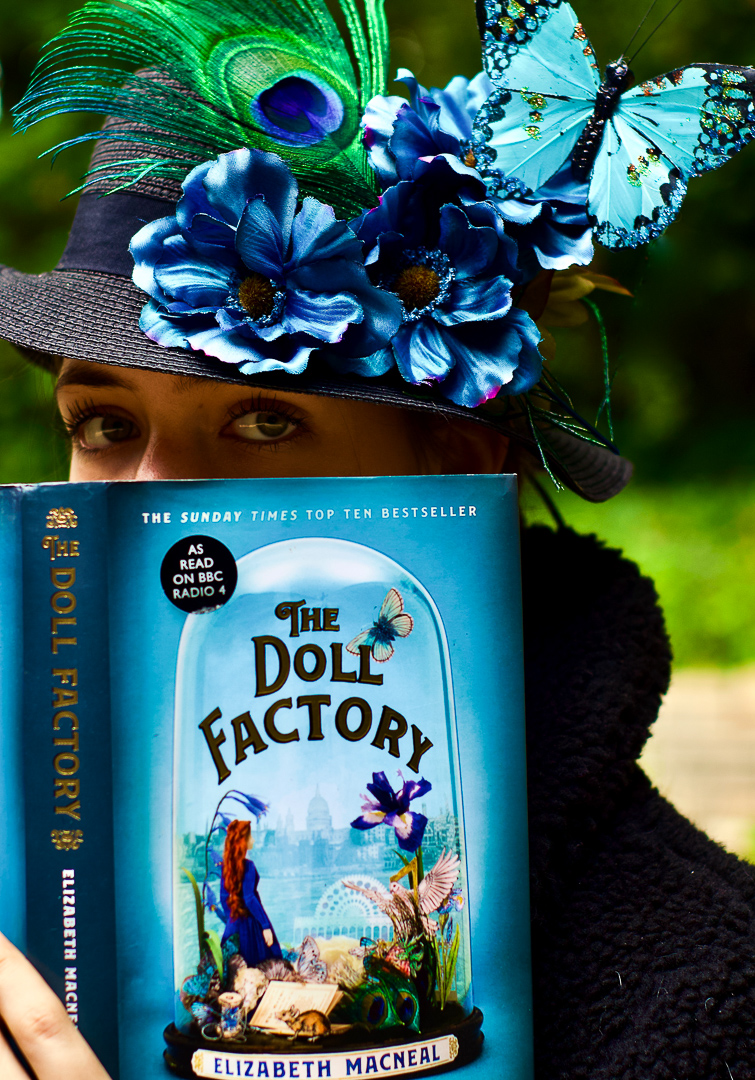
The Doll Factory Elizabeth Macneal Twin sisters Rose and Iris live in 1850’s London, working in a grimy little doll factory where they paint the faces and sew the clothes of porcelain dolls under the watchful eye of their abusive employer, Mrs. Salter. The sisters could not be more different. Rose, disfigured by smallpox and increasingly resigned to the narrow life available to her, longs for marriage and domestic security. But Iris dreams of something far beyond the factory walls: she wants to be an artist. When she is offered the chance to model for the enigmatic Pre-Raphaelite painter, Louis Frost, she agrees on one condition—he must teach her to paint. Suddenly, Iris is drawn into the bohemian world of London’s artists, with its heady mix of beauty, ambition, and unconventional ideas. But the freedom Iris discovers comes with its own dangers, particularly as her growing confidence puts her at odds with the expectations placed upon women. And then she falls prey to the unwanted attention of Silas, a talented taxidermist whose fixation with her turns sinister and threatens not just her new found freedom, but also her relationship with Rose. Bold and brash, this is a story painted with the deliciously lurid colors favored by the Pre-Raphaelites. It’s a world filled with art studios and curiosities, where the gloriously lush paintings and vibrant women mask a darkness and decay lurking just beneath the surface. I found it a touch slow to start, but once it gets going it settles in nicely to a chilling and macabre tale of love, ambition and obsession which becomes increasingly difficult to put down.
The Manningtree Witches A.K.Blakemore England in 1643 is deep in the grip of civil war and puritanical fervor. A deadly combination. In the provincial and impoverished Manningtree, a town largely devoid of men who are off fighting, Rebecca West lives with her widowed and decidedly outspoken mother. On one unfortunate day, Matthew Hopkins, expensively dressed and well educated, sidles into town and stirs up a whole lot of bother. Hopkins is a self-proclaimed witch hunter and under his gaze, the misfortunes of ordinary village life become reason for suspicion—a boy has a seizure, cows mysteriously perish, a woman falls ill. As tensions rise and accusations escalate it is not long before Rebecca, her mother and five other women are hauled off to jail where they languish for a year before being brought to trial. Based on the English witch trials of 1645, the book is a rich exploration of misogyny, zealotry and how suspicion can fast solidify into fact when vulnerable people are enduring hardship and hunger. Petty rivalries take hold, old grievances take on new meaning, fear becomes its own kind of evidence. The author is a poet, evidenced in the often stark beauty of her prose, and the exquisite precision of her words, luring is into the darkest corners of this world only to suddenly delight with bawdy humor and surprise with warm and witty banter. The result is a novel that is both grim and unexpectedly funny, its bleakness punctuated by flashes of irreverence and humanity. It can be difficult to get used to the writing style—but stick it out. It’s worth it.
Small Angels Lauren Owen When the original venue for her wedding falls through, Chloe chooses the charming chapel, Small Angels, as her back up plan. It’s set at the edge of Mockbeggar Woods in the idyllic English Village where her fiancé Sam and his sister Kate grew up. But Sam and Kate are vehemently opposed to such an idea for they know the darkness the wood holds within its thorny blackberry thickets. And in the days running up to her wedding, as strange things happen, Chloe remains blissfully unaware that she has awakened the vengeful spirit of Harry Child that Mockbeggar Woods holds deep within its gnarled branches. But while the book is framed around Chloe’s wedding, the story belongs to Kate and her relationship with Lucia, one of the five sisters of the infamous Gonne family who have become destined to ring church bells and light beacons in an attempt to hold secret the mysteries of Mockbeggar Woods. A creepy tale of misunderstandings and betrayal, where the rustling leaves whisper of jealousy and the chill of vengeance splinters the joy of a wedding. A slow burn and clunky at times, it’s an enjoyable read for lovers of gothic inspired fairy tales.
The Book Eaters Sunyi Dean Devon Fairweather is a Book Eater, born into a secret clan of families spread across the Yorkshire Moors. It’s a cruel, patriarchal society that is slowly dying out, forcing its women into unwanted marriages and childbearing. When Devon’s son, Cai, is born a mind-eater, things become complicated and she goes on the run with him, forced to stay one step ahead of not just her family, but her five-year-old’s voracious appetite for human brains. And because Cai takes on his victim’s knowledge and memories, sometimes with undesired consequences, Devon must get creative about which human she feeds him. The story alternates between the past, which constructs the strange, horrifying world of the Book Eaters and the present, which builds tension through the thrill of the chase toward an ultimate showdown. I was lured to this read by the book eating concept which sounded intriguing. Unfortunately it proves mostly tangential to the plot, which I found disappointing. There is some fun with it—girls are fed the sweetness of fairy tales while boys are allowed the sharp, fiery tang of adventure stories and naughty children must eat boring dictionaries— but the potential seemed so much deeper. Not entirely my cup of tea, but an entertaining and darkly creative fantasy read none-the-less.
~Once Upon a River Diane Setterfield On the banks of the river Thames is a pub, The Swan, where the locals have turned storytelling into something of a sport, meeting up to while away the long, cold winter nights with the promise of a good tale. But sometimes truth is stranger than fiction and on the evening of the winter solstice, a real story starts to unfurl before their very eyes. A large man, dripping blood and river water, walks through the door of the pub carrying what turns out to be the body of a dead child. Except a little while later the young girl takes a breath and returns to life. Anthony and Helena Vaughn believe she is their daughter, kidnapped two years earlier. Robert Armstrong believes she is his illigitimate grand- daughter, recently missing after the death of her mother. Lily White believes her to be her sister. Hope abounds, mystery swirls and tongues wag as speculation takes hold at the Swan. And so the stories of all three parties who lay claim to the un-dead girl are woven together, along with Henry Vaughn the man who carried her in, and Rita Sunday, the nurse who was present that night. It’s a gorgeous fairy tale of a story which dabbles in the supernatural and flirts a little with magic. It’s a slow, gorgeous, atmospheric burn, as deep and windy as the river upon which it takes place. You just can’t beat a book like this to carry you through a few cold evenings with a hot drink.
The Essex Serpent Sarah Perry In 1890’s London, Cora’s husband has died—and she’s not at all sorry about it. Deciding to escape the clutches of London she takes her young son to Colchester where she throws off the shackles of civil society (starting with her corset) and takes on the life of a naturalist, fossil hunting in the salt marshes in her shapeless, oversized clothes. Also newly arrived in Colchester is the Essex Serpent, a mythical sea snake with wings and sharp teeth which hasn’t put in an appearance since 1669. Its arrival causes all hell to break loose. Boats go missing, children act strangely, tongues wag, rumors fly. Cora, meanwhile, meets Will, the local parson who firmly believes that faith and science can be bedmates. The spark between the two is undeniable but Will is steadfast in his loyalty to his lovely wife and children. This doesn’t, however, prevent endless debate between the two, as the book examines the quintessentiallyVictorian threads of science bumping up against religion and skepticism knocking into faith. It’s elegant and spirited in it’s approach to love, loss and the complexities of the human heart and mind and the scenery is described so vividly that you feel instantly transported to the briny waters and eerily misty mornings of this seaside town. An ethereal and moody story about the things we fear, the things we believe, and the messy, fascinating business of being human.
Daisy Darker Alice Feeney On the evening of October 30th, the Darker family convenes at Seaglass, the isolated home of Daisy’s grandmother, to celebrate Nana’s 80th birthday the following day. Once everyone arrives, the house will be cut off from the mainland until morning. The fireworks begin when Nana decides to divulge the contents of her will and no-one is thrilled with what they hear. Then at midnight someone dies. Then another family member dies. Then another. The story is narrated by Daisy, who has always felt she never quite fitted into her family. Born with a serious heart condition, she has spent much of her life on the outside looking in, watching complicated family relationships unfold around her and absorbing the jealousies and resentments that nobody seems willing to confront. It is a wonderfully atmospheric tale with a distinct and delicious nod to Agatha Christies’ And Then There Were None, wrapping the mystery within an uncomfortable family drama where old wounds and petty grievances have festered away within a cast of family members who are not particularly likable. With sinister whisperings and gothic-y vibes this is a perfect read for this time of year.