Houses stand at the heart of our lives as a physical enclosure for our families and relationships, our loves and losses – providing solace and comfort to some, torment and pain to others. Which, perhaps, makes it unsurprising that there are so many books with “house” in the title—some of which really aren’t about houses at all. These eight encompass a variety of genres and issues.
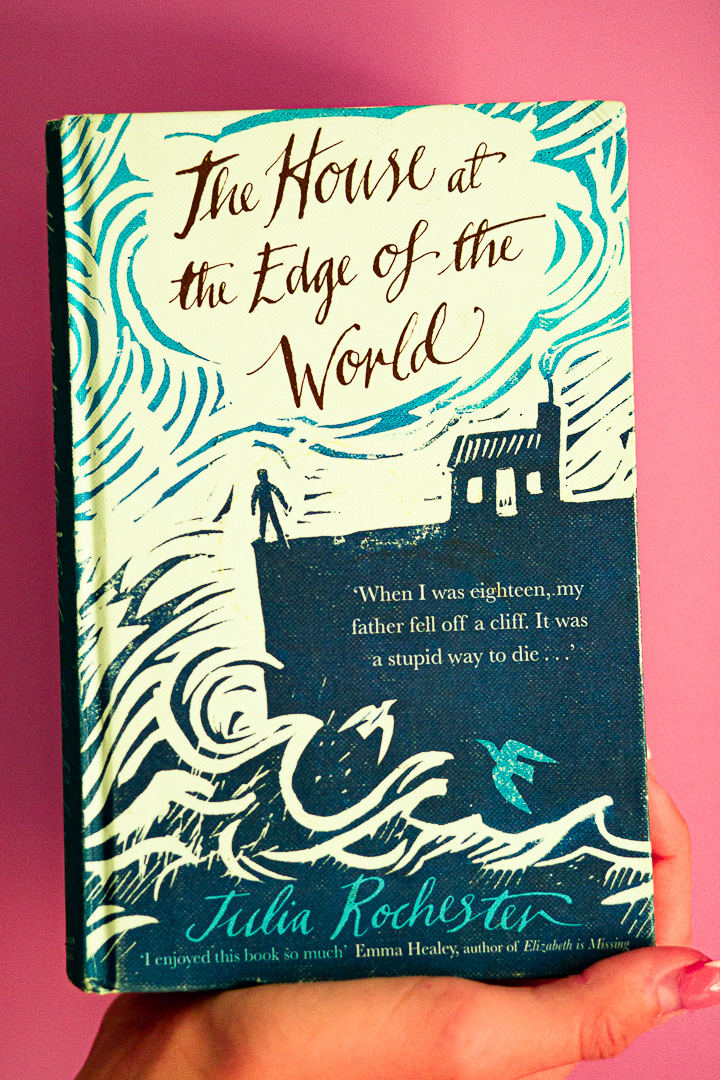
The House At The Edge Of The World Julia Rochester Set on the south coast of England, twins Corwin and Morwenna are eighteen years old when their father falls off a cliff and dies. It’s an event which splinters the family; their unhappy mother grabs the opportunity for pastures new; handsome, deeply adored Corwin takes off for far flung corners of the world in various attempts to save humanity; and prickly pear Morwenna settles in London where she binds books. Fifteen years later, a secret emerges that requires a re-evaluation of what exactly happened to their father, causing Morwenna to go back down paths already traveled, digging for answers and bringing her family together once more. A darkly comic, sharp-edged story of twins, family wounds, and secrets that have lingered beneath the surface for years, just waiting to be unearthed.
The House On Vesper Sands Paraic O’Donnell For some reason, when I picked up this book, I expected something dark and dour. Instead, I was pleasantly surprised by a story that’s light on its feet and brimming with wit and sly humor. On a bitter winter’s night in 1893, Esther Tills—a seamstress who has sewn words into her own skin—leaps from a window to her death. That same day, Gideon Bliss arrives in London at the request of his uncle, only to discover the man has vanished. What he does find is his uncle’s protégée, Angie Tatten, delirious in a church, clad only in a nightgown and babbling about black air and brightness. Through a twist of mistaken identity, Gideon is swept into the role of police sergeant under Inspector Cutter of Scotland Yard, where he becomes entangled in a series of increasingly strange investigations. Meanwhile, Octavia Hillingdon, a sharp-witted society columnist, is determined to uncover the truth behind the Spiriters—shadowy figures rumored to steal souls in gruesome fashion. Before long, Gideon’s and Octavia’s paths converge, their separate investigations tangling and then unfurling through the shadowy streets of London, before ultimately leading to the eponymous house on Vesper Sands, perched ominously along the Kentish coast. This is gothic Victoriana at its finest: atmospheric and just the right amount of morbid, spun with delicate threads of the supernatural and gossamer shades of the darkly whimsical. Underneath it all lies a thoughtful exploration of the hardships faced by women and the poor. The plot is intricate and delightfully Dickensian, with well-crafted dialogue, droll banter, and wonderfully drawn character dynamics that make the entire cast a pleasure to hang out with.
The London House Katherine Reay In present-day Boston, Caroline Payne is contacted by an old college friend who reveals he’s writing an article about her great-aunt Caro—a woman accused of betraying her country by running off with a Nazi. Except Caroline has always been told that Caro died of polio as a child. When her father reluctantly confirms the truth, Caroline heads to London House, the family home where her estranged mother now lives, determined to uncover the truth. What follows is a story steeped in lies, buried secrets, betrayals, and generational trauma, unfolding across two timelines—one in the present day, the other in a past which is revealed through letters Caroline discovers hidden away in the attic. This is a solid WWII comfort read if this is your jam—I happen to be a fan. This one does, however, fall far too often into the familiar trap of telling rather than showing. And the reliance on letters means thoughts and emotions are reiterated ad nauseam, leaving me thinking more than once —yeah, I get it, let’s move on. The novel’s most compelling element is Caro’s work for Elsa Schiaparelli. So, while the book didn’t completely work for me, the couture setting and the references to Schiaparelli’s iconic designs—which had me repeatedly scuttling to google for a visual—gave it enough of a hook to keep me invested.
House Of Trelawney Hannah Rothschild The backdrop to this novel is a crumbling English manor house, eccentric aristocrats, and the rugged beauty of Cornwall. The once-magnificent estate, home to the Earls of Trelawney for eight centuries, is now slowly collapsing under the weight of neglect—the roof leaks, the hot water barely functions, and the gardens have long since surrendered themselves to wilderness. The current Trelawney family seems determined to mirror the decay of the house itself, each member drifting through life in their own state of emotional and financial disrepair. Set in the uneasy lead-up to the 2007 financial crisis, the novel is filled with feckless behavior, self-indulgence, and all the absurdities of inherited privilege. At times, that aimlessness can wear a little thin, but the book balances it with enough whimsy, warmth, and sharp satire to keep everything buoyant. And while neat, tidy endings are not usually my preference, there was something oddly satisfying about the way this story gathered its chaos into order. In this messy world, sometimes a tidy resolution feels exactly right.
Bleak House Charles Dickens It is not possible to have a collection of British books about houses without including this one—Dicken’s longest and perhaps driest of novels. At the center of the story lies the infamous court case of Jarndyce and Jarndyce, a lawsuit that has dragged on for generations, becoming so convoluted and absurd that nobody involved actually understands it anymore. The titular Bleak House belongs to John Jarndyce, who takes in Esther Summerson along with Ada and Richard, distant cousins whose futures remain tethered to the possibility of the case ever being resolved. Around them swirls a vast cast of unforgettable Dickensian characters: the icy Lady Dedlock, the relentlessly perceptive Inspector Bucket, the gloriously obsequious William Guppy. They fall in love, grow ill, ruin themselves, commit crimes, and die. Some are fanciful and foppish, others kind and tender-hearted. Their lives seem, at first, disconnected, but in classic Dickens fashion every thread is gloriously gathered together into an intricate and dazzling whole. Part social satire, part murder mystery, part indictment of the Victorian legal system, the novel skewers institutional corruption with all the wit, intelligence, and humanity Dickens is celebrated for. Still, at well over 900 pages, even admirers may find stretches of it slow-going and occasionally tedious.
The House On The Strand Daphne du Maurier Eccentric biophysicist Magnus Lane invites his friend Dick Young to stay at his house in Cornwall before Dick’s wife and stepsons arrive for the summer. Once there, Magnus persuades him to try an experimental drug that allows the user to mentally travel back to fourteenth-century Cornwall while their body remains in the present. Dick can observe the past but not participate in it, though experiences bleed oddly into reality—if he walks through water in the past, he wakes in the present soaking wet, and when the drug wears off he appears disoriented and drunk. Given the novel’s 1960s setting, there’s a strong suggestion that Magnus’ potion resembles LSD and other mind-altering substances of the era. As Dick becomes increasingly obsessed with the medieval world—particularly the beautiful Lady Isolda—the line between past and present begins to blur, and as he tumbles into a psychological unravelling, there are damaging consequences for his real life. The book is a curious blend of sci-fi, psychological suspense and family drama with gothic undertones. And Daphne du Maurier’s evocative descriptions of the Cornish coast give the story a haunting sense of place and steep it in atmosphere. A sometimes compelling read which, unfortunately, also has a sprightly dose of tedium thrown in.
Crooked House Agatha Christie This is vintage Agatha Christie: a sprawling country manor, a wealthy and deeply dysfunctional family, a cast of eccentric characters, and a murder mystery delivered with one of Christie’s wonderfully sharp final twists. Charles Hayward has just returned to England after the war and hopes to marry his sweetheart, Sophia Leonides. But before their future can begin, Sophia’s grandfather—the immensely rich and manipulative Aristide Leonides—is found dead, poisoned in his own home. Sophia is convinced the murderer is someone within the family, and with suspicion hanging over the household, Charles uses his father’s connection to Scotland Yard to involve himself in the investigation. At Three Gables, the rambling Leonides family home, Charles finds himself immersed in a gloriously tumultuous household. There’s Sophia’s flamboyant actress mother; her mild and ineffectual father; two deeply unpleasant younger siblings; assorted uncles and aunts; Aristide’s much younger second wife—who may or may not be having a torrid affair with the children’s tutor; and the formidable Edith de Haviland, Aristide’s cool, intelligent sister-in-law who helped raise the family after his first wife died. Beneath this portrait of a family warped by wealth and dependency, petty resentments and long-buried grievances simmer. Everyone has a motive, everyone has something to hide, and the household is riddled with secrets. Clever and sharply observed, it’s exactly the sort of classic country-house mystery Christie perfected.
The House At Riverton Kate Morton In the summer of 1924, a glittering party is held at Riverton Manor—a night of glamour and illusion that ends in tragedy when a young man shoots himself. The only witnesses are the daughters of the house, Hannah and Emmeline, along with Grace, a servant, whose life will be quietly and irrevocably altered by what she sees. Decades later, Grace is 98 years old and living in a nursing home when she is unexpectedly paid a visit by a woman hoping to make a film about that long-ago summer. The encounter unlocks memories she has spent a lifetime burying, and through a series of flashbacks we follow Grace’s story as it unfolds against the sweeping backdrop of the First World War, the Roaring Twenties, and a society in the midst of profound transformation. This is Kate Morton’s debut novel, and establishes many of the hallmarks that define her later work: a richly textured narrative told through shifting timelines, a slow-unfolding mystery built on secrets and half-truths, and an immersive exploration of class, memory, and social change. It’s the kind of story that pulls you into a fully realised world and keeps you there, piece by piece, revelation by revelation. And should you enjoy this one, her later novel, The Lake House, returns to many of the same pleasures: another beautiful house, another extravagant party, and this time, a vanishing son.