
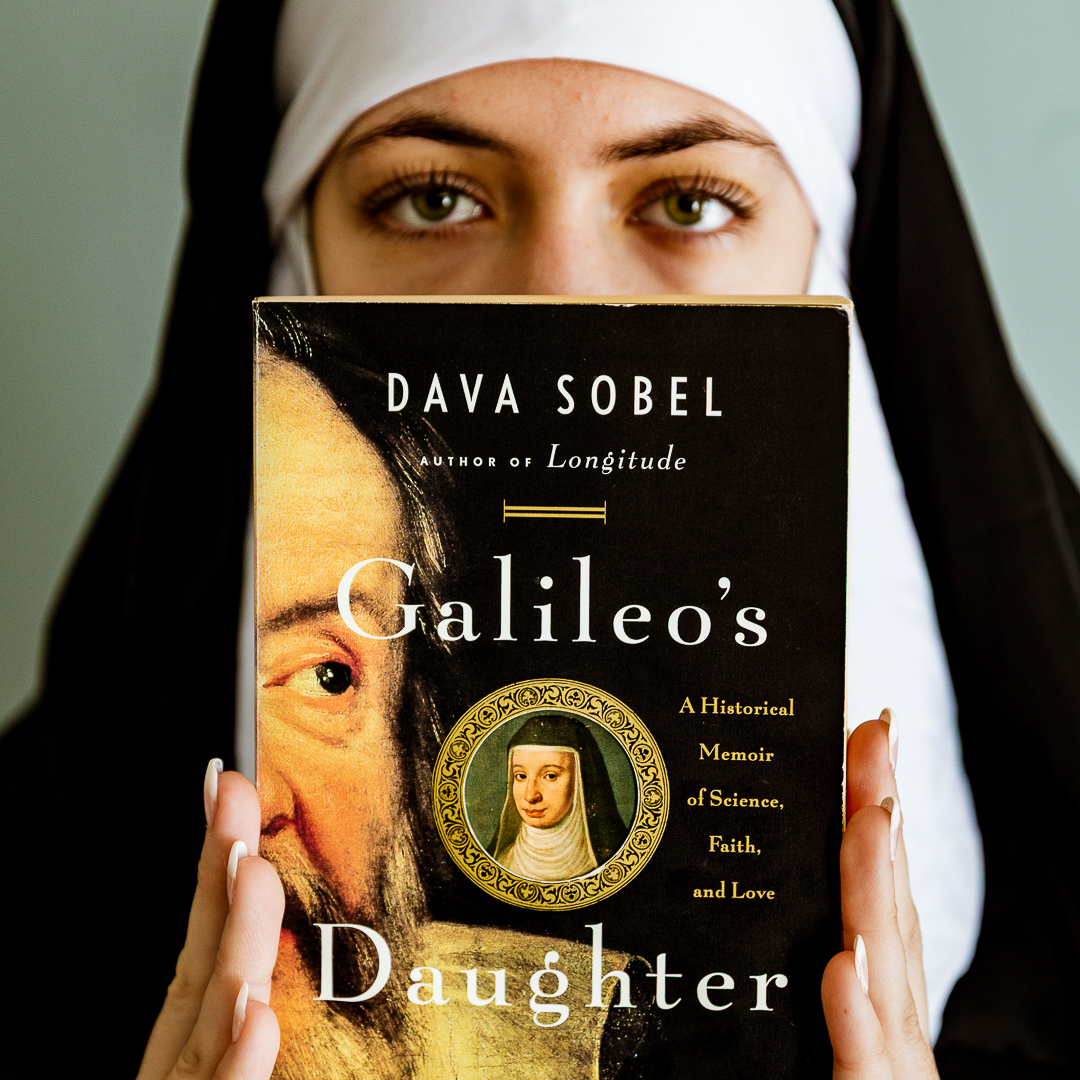
Galileo’s Daughter Dava Sobel Sister Maria Celeste, a cloistered nun, is the oldest of Galileo Galilei’s three illegitimate children. She wrote to her father regularly and her letters set up a nice framework for this book which is, essentially, an account of the trials and tribulations that faced Galileo throughout his life. Maria wrote beautifully and despite the fact that her father’s return correspondence no longer exists, it is clear that the two enjoyed a deep regard for each other and were able to share their mutual love of both science and faith. No need to be a science geek to enjoy this read though – between court trials for heresy, the plague and power hungry Popes, there’s a lot of drama to be had in 17th century Italy and even more in Galileo’s orbit as he struggles to fit his science into a world rife with religious prejudice.
A Most Agreeable Murder Julia Seales Beatrice Steele of Swampshire, England might be curious by nature and be in possession of a lively wit, but she is terrible at needlework and bereft of musical ability. What she does have though, is a deep and abiding love of murder —the solving, not the committing, of it. She locks herself away in her room to read the newspapers, analyze committed crimes and write letters to a renowned detective to expound on her theories of deduction. So imagine Beatrice’s delight when Edmund Croaksworth drops dead in the middle of a minuet at the autumnal ball. And the incident takes on heightened meaning when it looks like her sister Louisa, may have been involved. As a storm rages outside and a cast of quirky characters run amok inside, Beatrice, aided and abetted by the prickly, eye-patched detective, Inspector Drake, looks askance at her cast of potential murderers on the way to achieving her (rather morbid) dream of solving a crime. It is easy for satire to overplay its hand and at times this book is no exception, but it impales Regency-era tropes with such elegant delight and with such tart, crisp humour that it is difficult not to fall under its beguiling spell. Maybe it’s the trauma of current politics, but I leaned well and truly into the irreverently charming world of Beatrice Steele and her family and friends. Should you enjoy it too, the next in the series just came out—A Terribly Nasty Business.
Good Company Cynthia D’Aprix Sweeney On the eve of her daughter’s high school graduation, happily married Flora finds her husband’s wedding ring stuffed at the back of a box in the garage – a ring that was supposed to be at the bottom of a lake. What really happened on that August night so long ago? So begins the story of two marriages and four friends, how they came to know each other, formed a theatre company and how their lives change over the years. Through flashbacks, a wistful story of life’s disappointments, betrayals and joys unravels. It’s a relaxing read, gentle and poignant but with edges sharp enough to offset the cliched moments. I adored the author’s first book The Nest and while I didn’t find this to be as sharp or as nuanced I still thoroughly enjoyed it.
If I Had Your Face Frances Cha A provocative rendering of modern day South Korea where women appear to be nothing more than props for men and looking beautiful comes at an extraordinarily high price – jaw surgery is one of the most popular elective surgeries in South Korea and comes with a long and painful recovery. A beautiful, high-class call girl; a talented artist; a mute hairstylist; a newlywed desperate to become pregnant. These women’s struggles are varied but always revolve around the heavy hitting social constructs of misogyny (men do not come off well in this book), beauty, wealth and class. Uneven and thin in parts it is, nevertheless, a fascinating and icy look at South Korean culture. While often bleak and depressing, it is the power of the women’s friendships and their resilience and bravery in a world stacked against them, that provides the warmth and heart of the story.
Black Cake Charmaine Wilkerson Byron and Benedetta (Benny) Bennett have come together after the death of their mother, Eleanor. Once extremely close, despite their nine year age gap, the two haven’t seen each other in several years. In fact, six years earlier Benny failed to show at their father’s funeral. But now their mother’s lawyer has two things for them: a recorded voice message in which she drops the bombshell that they have a sister, and a handwritten note with a cryptic message that there’s a small black cake in the freezer, to share it when the time is right and that they’ll know exactly when that is. In flashbacks, via a variety of people and in short chapters (often less than a page in length) we learn their mother’s story, and ultimately, their own. It starts on the Caribbean island home from which Eleanor once fled under suspicion of murder, moves to Britain and then on to California where Byron and Benny are raised. It’s a beautifully told story of secrets and lies, being lost and then found, and how culture and traditions shape and connect us all. And running throughout is the story of black cake, traditionally made for holidays and weddings and as one character notes “is essentially a plum pudding handed down to the Caribbeans by colonizers from a cold country.” Ouch.
Caste Isabel Wilkerson Believing the term racism to be insufficient to describe the oppression of Black people in America, Wilkerson instead chooses to frame her book around the concept of caste, comparing the treatment of Black Americans to that of the untouchables in the centuries old Indian caste system and also to Jews in Nazi Germany. It offers up a seemingly never-ending stream of abhorrent scenarios and stories to support her theories and unsettling parallels and yet is still written with an extraordinary warmth and lightness given the subject matter. And while there are many appalling things in this book, the biggest, most shocking takeaway after reading it is this: the Nazis looked to America and its treatment of Black Americans, for inspiration as how to deal with the Jews. They used laws on the books in various states to create their own similar ones. They looked with wonder at this country as to how it managed to segregate, abuse and murder Black Americans and still maintain its air of respectability in the world.